
About Myotherapy
Funnily enough, myo- originates from the Greek word for both muscle and mouse! The term myotherapy was coined in America in the 1970s, to describe a system combining muscular trigger point therapy and corrective exercises in the treatment of pain and muscle dysfunction. Myotherapy has evolved into a highly respected and sought after allied health service - largely because we’re a passionate profession, highly motivated by problem solving and results-driven thinking.
Trigger points were mapped and characterised by Drs Janet Travell & David Simons in the 1940s, the former of whom was instrumental in pioneering the medical discipline of myofascial dry needling to resolve trigger points and associated patterns of pain and compensation. Myotherapists were early adoptors of the practice of dry needling here in Australia, and we train extensively in this craft to maintain our excllent skills and reputation. That said, needle phobia is very common - if not a logical response to deliberate skin penetration! We’re therefore very selective about who and how we needle. The client ultimately decides whether dry needling is appropriate for them.
Myotherapists are renowned for “touching the pain”. Our anatomical knowledge and palpatory skills make for specific treatment. This can be - but isn’t necessarily - an uncomfortable experience, or “good pain”, as we’re often told. We have many tools in our therapy kit to help minimise treatment intensity - none of them more important than open client-therapist communication. Treatment modalities include: manual myofascial release; MET stretching; gentle joint mobilisation; myofascial dry needling; corrective exercise and self-treatment prescription; specific massage; thermal therapies; manual lymphatic drainage; cupping; and TENS.
Myotherapy is effective in the management of an extensive array of physical complaints, such as: headache and migraine; joint pain (neck/back/shoulder/elbow/wrist/knee/ankle/foot); mobility issues; overuse injuries (eg. Tennis/Golfer’s Elbow); muscle strain; tendon pain; pelvic floor issues; frozen shoulder (adhesive capsulitis); runner’s knee; foot problems (eg. plantar fasciitis); peripheral nerve entrapment; jaw pain (TMJD); myofascial challenges associated with perimenopause and menopause; period pain; pregnancy related discomfort; ITB syndrome; bursitis; joint hypermobility syndromes; fibromyalgia; and so on.
Wondering if myotherapy is right for you? Get in touch so we can help you to decide.
Me.
I hold a Bachelor of Health Science (Myotherapy) and have so far enjoyed over 21 years in clinical practice in Melbourne and Geelong.
My training included placements in a wide variety of professional sporting organisations; cancer & palliative care settings; homeless outreach centres; and observation of orthopedic surgeries.
My career began in one of Melbourne’s most reputable sports medicine clinics, where I worked for 3 years before moving into private practice to focus on chronic and cryptic complaints of everyday warriors.
I lectured on Dry Needling and Musculoskeletal Pathology in the RMIT Myotherapy program for 2 years, and have created, presented, and tutored in dry needling training workshops for allied health peak bodies.
Prior to discovering myotherapy, I worked as a personal trainer at Monash University for 6 years while studying a grad. dip. (psychology).
I’m a bit partial to study. Some might consider this an expensive form of procrastination, and they could well be right. In any case, my learning has encompassed literature, languages, psychology, creative writing, sustainable living, and of course, myotherapy. Oh, and there’s the ongoing crash course in parenting, which probably counts as a PhD.
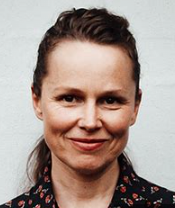
Elizabeth Sager, captured 7 years ago. Now sporting an entirely new skeleton, reading glasses, and increasingly gravitational features. Be alert but not alarmed.